
Intermodal transport: The future of modern logistics
In an increasingly globalised world, where goods flow across continents, logistics efficiency is becoming a key success factor for companies. At Skyline, we understand the unique challenges this presents and want to keep you informed about the latest developments on this blog. This includes introducing you to important key terms from the world of logistics that are also relevant to our work. One example is intermodal transport. But what exactly does this term mean, and why is it indispensable for modern logistics? We reveal the details.
reading time: 6 minutes
What is intermodal transport?
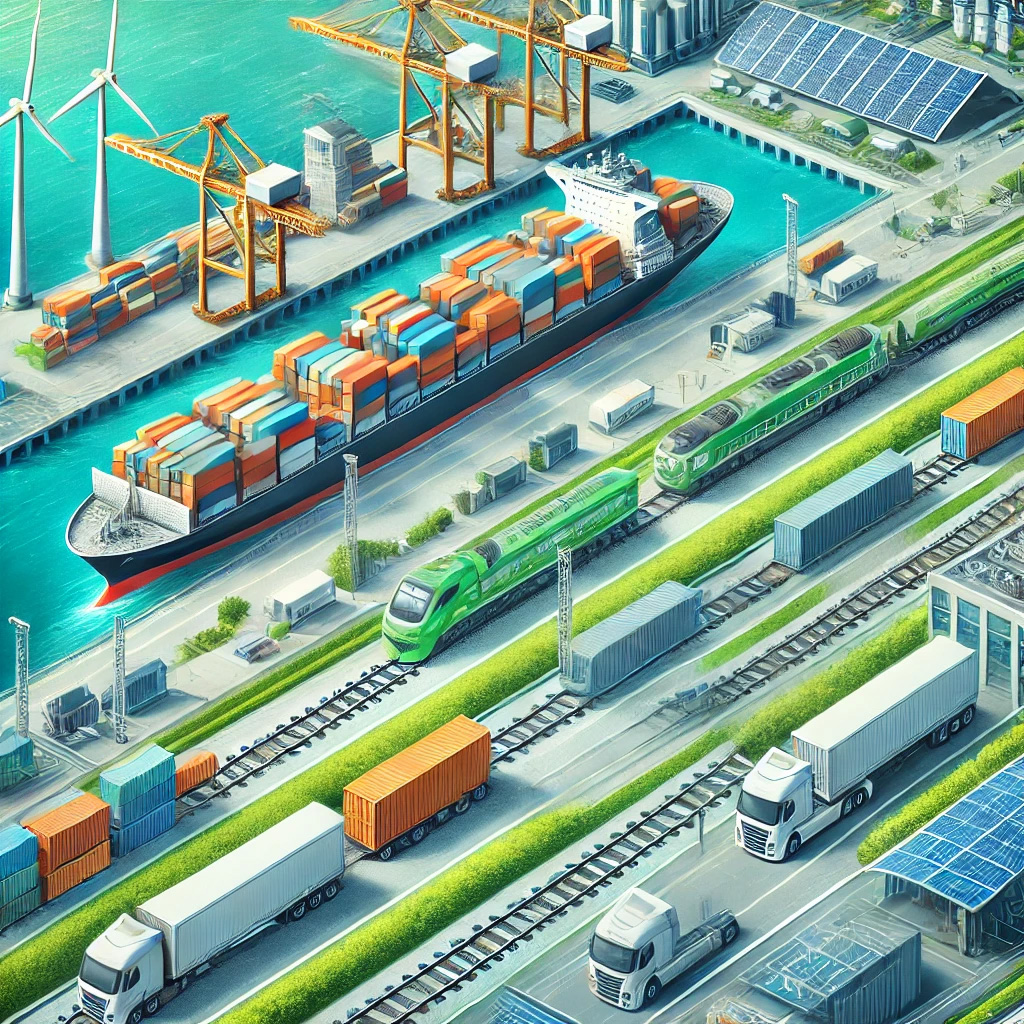
The term ‘intermodal transport’ refers to the use of different modes of transport – such as road, rail, ship and aeroplane – within a single transport chain. The goods being transported remain in the same loading unit, such as a container, swap body or semi-trailer. This minimises the need to tranship the cargo when changing modes of transport, which reduces time, costs and the risk of damage.
Example: A container is loaded from a cargo ship onto a train at a seaport, travels to a regional logistics centre and is then transferred to a lorry, which finally delivers the goods to the end customer. Each of these stages of transport utilises the strengths of the respective mode of transport – ships for high transport capacity, trains for energy efficiency over long distances and lorries for flexible fine distribution.
Advantages of intermodal transport
- Increased efficiency: Transport routes can be optimised by combining the best features of different modes of transport. This saves time and money.
- Sustainability: The increased use of rail and ship transport reduces CO2 emissions and energy consumption compared to road transport alone.
- Cost-effectiveness: Intermodal systems often offer cheaper alternatives to purely road-based transport, especially for international and transcontinental supply chains.
- Flexibility: Companies can respond better to disruptions, such as traffic jams or weather problems, as they can incorporate alternative routes or modes of transport.
- Safety advantages: Fewer transhipments mean a lower risk of damage or loss.
Challenges in implementation
Despite its advantages, intermodal transport is not without its challenges:
- Infrastructure: A well-developed infrastructure, such as container terminals, transhipment points and rail networks, is required to ensure a smooth transition between modes of transport. At Skyline, we would therefore like to see investment in infrastructure development, particularly in Germany.
- Standardisation: Different countries and operators use systems that are sometimes incompatible, which can make cooperation difficult.
- Planning and coordination: Efficient control requires modern IT systems that connect all modes of transport and stakeholders involved. At Skyline, we have therefore been relying on digital tools and technologies for a long time.
Why intermodal transport is the future
With increasing demands for sustainability and efficiency in logistics, intermodal transport is becoming an indispensable part of modern supply chains. This approach plays a central role, especially in Europe, where distances between countries are short and the rail infrastructure is well developed. In addition, governments are promoting rail and shipping to reduce the environmental impact of road transport.
Companies that rely on intermodal transport solutions can not only reduce their costs, but also make an important contribution to climate protection – an argument that is well received by end customers in times of growing environmental awareness.
In short
Intermodal transport combines the best of different worlds and is one of the most effective solutions to the challenges of modern logistics. It is efficient, sustainable and economical – and thus key to competitive supply chains in a globalised world. Companies that integrate this form of transport early on secure a decisive advantage in the market.
Do you have questions about intermodal transport or are you looking for a reliable partner for logistics solutions? Give us a call or send us a message. Our Skyline team will be happy to advise you personally.
Skyline Express will take you to your destination.
Whether sea freight, air freight, land transport or complex logistics solutions – our team ensures smooth processes, fast transport and full transparency along the entire supply chain. Put your trust in experience, dynamism and digital efficiency.
